In infrastructure projects, road construction or temporary projects, concrete mobile mixing plant with its flexible deployment, rapid production characteristics, has become the preferred equipment for many construction parties. However, the product specifications on the market are very different, the quality is uneven, if the selection error may lead to delays in construction and cost overruns. This article will systematically comb the purchase of mobile mixing plant key indicators and decision logic to help you accurately match the needs.
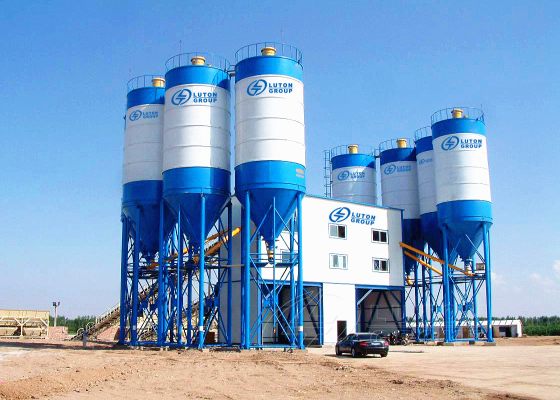
Clarify The Core Requirements – First Locate The Scene and Then Match The Parameters
Construction Scenario Analysis
Energineering Type
– Road/railway construction: Frequent transfer is required, and the model with modular design and high disassembly efficiency is preferred (such as 8 hours to complete the relocation).
– Water conservancy project: Steel structure requiring anti-corrosion treatment in humid environment and electrical system with IP65 protection grade.
– Urban renovation project: the site is narrow, the equipment is required to cover an area of no more than 50m2, and the noise is no more than 75dB (night construction compliance).
Concrete Demand
– Daily output: small project (≤500m3 per day) optional HZS60 (theoretical 60m3/h), large projects need HZS120 or more.
– Concrete type: conventional C30-C50 optional general-purpose host: Special concrete containing fiber or light aggregate requires custom mixing blades and lining boards.
Environmental Adaptability
– Climate conditions: cold areas need to heat water tank (maintain water temperature≥10℃) and hydraulic oil preheating function; Hot desert areas need to strengthen the heat dissipation system.
– Power supply: When there is no stable power supply, the diesel generator set must be compatible (30% power redundancy is recommended).
Core Configuration: The Four Major Systems Determine The Performance Ceiling
Mixing system: Balance of efficiency and quality
– Host type
– Double horizontal shaft mandatory type: mainstream choice, good mixing quality, cycle≤60s (20% shorter than single horizontal shaft).
– Planetary: suitable for special concrete, but the power consumption is 30% higher and the price is 40% more expensive.
Key parameter
– Rated capacity:1.5m3 host suitable for HZS75 station, 2m3 suitable for HZS120 station.
– Liner/blade material: high chromium alloy cast iron life ≥100,000 times, better than ordinary manganese steel.
- Batching system: accuracy determines concrete grade
– Aggregate measurement: independent measurement in three or four bins ( error ≤±2%), real-time monitoring of sand and stone moisture content can reduce cement waste.
– Powder weighing: pneumatic butterfly valve is better than mechanical type, with screw conveyor (tilt Angle ≤30°) to avoid material blocking.
- Control system: the degree of intelligence affects labor costs
– Basic version: PLC control, automatic batching, fault alarm.
– Advanced version: Internet of Things access (such as 5G module), support remote monitoring, production data cloud backup.
Moving chassis: Transfer efficiency wins and losses
– Semi-mounted: suitable for road transport, need to match the traction locomotive (such as 6×4 heavy truck).
– Modular trailer: Each unit is packed independently to adapt to complex terrain such as mountains and mud, but the assembly time is increased by 50%.
The Pit Avoidance Guide: Hidden Costs And Risk Warning
Energy Traps
– The power of the low-quality main motor is false, and the actual power consumption may exceed the budget by 20%. It is recommended to compare the high-efficiency motors ( such as YE4 series) in the “ List of energy-saving electromechanical Equipment” of the Ministry of Industry and Information Technology.
Maintain the black hole
– It is difficult to maintain the equipment with a high proportion of non-standard parts in the later period, and it is necessary to confirm whether the wearing parts (mixing blades, conveyor belts) are compatible with the common models in the market.
Environmental compliance
– Mixing plant without pulse dust collector may exceed the standard (>30mg/m3) and face the risk of environmental punishment.
Brand Selection and Cost Accounting
Echelon Reference
– The first echelon: Sany Heavy Industry, Zoomlion (market share of more than 50%, 5-year failure rate <8%).
– Cost-effective choice: South Roadbed, Tietuo machinery, LUTON GROUP ( low price 15-20%, suitable for small and medium-sized projects).
Total Cost Of Ownership (TCO) Model
| Project | HZS60 | HZS120 |
| Purchase Cost | $250,000 | $150,000 |
| 5-years Electricity Consumption | $67,000 | $55,000 |
| Maintenance Cost | $35,000 | $21,000 |
| Salvage Rate | 45% | 60% |
| Total Cost | $350,000 | $400,000 |
Note: According to the annual output of 100,000m3 concrete, the long-term cost advantage of imported equipment is gradually becoming more and more obvious.
Decision Process: Five steps to lock the optimal solution
- Demand list: Clear concrete label, daily output, transfer frequency, environmental protection protection requirements.
- On-site inspector: Measure the site size, check the power/water conditions, and exclude incompatible schemes.
- Supplier comparison: site case videos and energy consumption data of the same type of equipment are required.
- Test machine verification: Focus on testing the stability and failure rate of continuous 8 hours of operation.
- Contract terms: Additional key components warranty period (such as 3 years for the main engine, 5 years for the control system).
Conclusion: Mobile Mixing Plant is not a “ standard product”
The essence of purchasing mobile mixing plant is customized procurement – it is necessary to find the best balance between transition efficiency, output quality and cost control. It is recommended to follow the logic of “scenario first, parameter second, brand second” to avoid increasing the budget by redundant functions. Through the fine calculation and field verification, it can leverage the maximum engineering benefit with the minimum investment.